


Defining IT Operations (ITOps)
IT Operations keeps systems running, services stable, and users supported across on-prem, cloud, and hybrid environments. It covers everything involved in maintaining daily technology functions: managing infrastructure, monitoring performance, controlling risk, resolving incidents, and ensuring business continuity.
For teams asking What is IT Operations? – the answer starts here, with the processes and responsibilities that keep an organization’s digital backbone steady.
Scope of ITOps
IT Operations covers a wide range of activities that keep an organization functioning. It spans the oversight of physical and virtual infrastructure, management of application performance, and governance of cloud environments. The scope continues to expand as enterprises adopt hybrid and distributed models.
- Infrastructure care across servers, storage, networks, and data centers
- Application availability and runtime performance across on-premises and cloud
- Cloud operations for multi-cloud, hybrid, and edge environments
Key responsibilities
IT Operations’ teams ensure systems stay available, efficient, and resilient. They manage daily activities that keep everything from servers to business applications running smoothly.
- Running mission-critical services and business solutions
- Managing infrastructure health, performance, and scalability
- Overseeing disaster recovery planning, testing, and execution
ITOps vs. IT Infrastructure: What’s the difference?
IT infrastructure consists of the hardware, compute layers, and networks that support the environment. IT Operations manages the workflows, processes, tools, and coordination required to run that environment reliably.
| Area | IT Operations | IT Infrastructure |
| Purpose | Maintain uptime, performance, service flow | Provide compute, storage, networking |
| Scope | Broad operational oversight | Physical and virtual components |
| Orientation | Process and service focused | Technical resource focused |
| Owner | IT Operations Manager | Infra/engineering teams |
Evolution of IT Operations: From Traditional Ops to AIOps
The rise of AIOps in IT operations
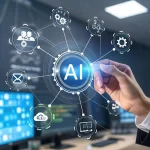
IT Operations teams now work with massive data streams from cloud platforms, microservices, distributed apps, and hybrid networks. AIOps strengthens incident response, performance analysis, and root-cause diagnostics by applying machine learning to these signals. It brings faster pattern recognition, stronger correlation, and automated insights that shorten recovery cycles.
How AI and ML are transforming ITOps
AI-driven incident management replaces manual triage with automated correlation. Instead of scanning dozens of alerts, operators receive consolidated signals that highlight impact areas, affected services, and probable causes. This sharpens focus and reduces the noise that slows down response.
Predictive maintenance analyzes logs, metrics, and time-series patterns to forecast issues before users notice disruptions. Machine learning models can flag resource saturation, degrading hardware, rising error rates, or unusual latency trends early, giving teams space to plan fixes without creating downtime.
Steps to evolve your team to mature ITOps
- Adopt observability tools with unified metrics, logs, and traces
- Introduce automation for repetitive workflows and approvals
- Build runbooks for recurring incidents
- Shift from siloed teams to cross-functional squads
- Expand AIOps usage from pilots into core operations

Deep Dive into the Role of IT Operations Managers
What does an IT operations manager do?
An IT operations manager oversees the daily health of the technology environment. They coordinate infrastructure support, manage monitoring systems, lead incident response, and ensure that applications and services run with minimal disruption. Their work blends operational oversight with strategic planning.
They also guide capacity planning, performance optimization, vendor governance, patch cycles, and cross-team alignment. The role influences decisions across cloud, infrastructure, automation, lifecycle management, and service delivery.
Core skills and career path
An IT operations manager needs strong analytical skills to evaluate telemetry, understand system behavior, and quickly interpret emerging issues. Leadership skill is equally important since they coordinate multiple teams during incidents, manage escalations, and run improvement programs.
Core skill areas include:
- Infrastructure fundamentals across cloud and on-premises
- Monitoring and observability
- Scripting and automation
- Change, incident, and problem management
- Capacity and performance forecasting
- Vendor and contract governance
Career paths often begin in support engineering, network operations, system administration, DevOps, or SRE roles. As experience builds, professionals grow into operations leadership, service delivery, or broader IT management positions.
How an IT operations manager drives transformation and ROI
IT operations managers drive modernization by improving response workflows, strengthening observability, introducing automation, and reducing the operational friction that drains time and budget. They influence ROI by reducing downtime, eliminating duplicated tools, and improving resource utilization.
They also lead the execution of reliability initiatives, guide the adoption of cloud capabilities, and ensure that teams follow consistent processes. Through structured operations, they help the business scale without raising risk.

Best Practices and Checklist for Effective IT Operations
Operational maturity checklist
Operational maturity develops through consistency, visibility, automation, and structured response. A practical playbook helps teams standardize how they manage daily work.
- Clearly defined incident response processes
- Accurate and updated documentation
- Unified monitoring and alerting
- CMDB coverage and configuration accuracy
- Regular capacity analysis
- Patch management discipline
- Automated remediation for routine tasks
- Defined SLAs and SLOs
- Standard change workflows
- Effective handoff procedures
- Continuous improvement cycles
- Stakeholder communication habits
Incident response and disaster recovery checklist
Incident response requires fast coordination between teams, tools, and processes. Disaster recovery demands tested scenarios, verified plans, and clear role assignments.
- Incident severity levels and triggers
- Communication paths for alerts and escalations
- Runbooks for known issues
- Recovery time and recovery point objectives
- Cloud and data center failover plans
- Tested backup restoration steps
- Lessons-learned reviews after major events
Measuring Business Impact
Key performance indicators for ITOps
IT operations teams track KPIs that measure stability, performance, and responsiveness. These metrics guide planning and influence how leaders set improvement goals.
- MTTR (mean time to resolve)
- MTTD (mean time to detect)
- Availability and uptime percentages
- Change success rate
- Number of recurring incidents
- Resource utilization levels
How to present ROI to business leaders
Business leaders respond to outcomes, not technical detail. ROI should map operational improvements to real business gains.
- Reduced downtime hours
- Lower incident-related costs
- Faster releases through smoother operations
- Fewer service-impacting events
- Improved resource efficiency
Challenges and Risks in IT Operations
Common pitfalls
- Tool sprawl drains time and increases integration complexity. When teams rely on disconnected tools, data becomes fragmented and troubleshooting slows down. IT Operations requires consolidation and strong vendor governance to prevent overlap.
- Alert fatigue hits operations teams when monitoring tools produce high alert volumes with little context. Noise leads to missed incidents and slower responses. Prioritization and correlation help reduce the overload.
- Team silos create knowledge gaps and slow collaboration. When network, infrastructure, cloud, security, and DevOps teams work in isolation, incident handling becomes disjointed. Shared processes and cross-team rituals keep operations aligned.
Governance compliance and risk management
Governance drives consistency through processes, accountability, and auditability. IT Operations teams rely on governance frameworks to guide changes, manage vendors, and maintain trustworthy documentation. Strong governance also protects the environment from unauthorized modifications.
Compliance work ensures that systems follow legal, regulatory, and contractual requirements. Operations teams must coordinate with security, auditing, and legal stakeholders to maintain compliance posture across data management, access control, and operational logs.
Risk management identifies, evaluates, and mitigates threats to stability. Capacity issues, configuration drift, integration failures, and cloud misconfigurations all represent operational risks. Proactive reviews and structured analysis help minimize failures.
Change management for operations transformation
Change management keeps updates predictable, coordinated, and safe. IT Operations teams use change windows, approval paths, and validation routines to protect uptime while supporting innovation. Well-run change processes keep releases smooth and reduce service disruption.
Future Trends in IT Operations
AIOps and predictive operations
Predictive operations powered by AIOps will continue shaping how teams anticipate issues and automate responses. Machine learning models will analyze patterns across distributed environments, giving operators the ability to prevent incidents before they occur.
Edge computing, serverless, and hybrid cloud impact
The rise of edge computing and serverless models expands IT Operations beyond centralized environments. Teams must manage distributed workloads, new dependency chains, and evolving traffic patterns. Hybrid cloud environments will push operations teams to master connectivity, governance, and observability across multiple execution layers.
The role of observability and data-driven ops
Observability will become a central practice as microservices and distributed apps grow in complexity. Data-driven operations will rely on unified dashboards that combine traces, logs, and metrics to give operators full context. This shift moves teams toward proactive, insight-led decision-making.
How to Get Started Building or Evolving Your ITOps Strategy
First steps for small teams vs. large enterprises
Small teams benefit from focused monitoring, simple runbooks, and essential automation. Large enterprises gain value from structured frameworks, cross-team coordination, and integrated tool chains.
- Standardize core workflows
- Establish monitoring baselines
- Create escalation paths
- Align cloud and on-premises strategies
- Define ownership for services
Recommended tools and frameworks
- Monitoring and observability platforms
- Alert correlation and AIOps solutions
- Configuration and asset management
- Cloud governance tools
- Automation and orchestration layers
Training and team alignment
Training ensures that teams understand tool chains, workflows, and reliability goals. Continuous learning builds a culture of improvement and keeps operators aligned with new technologies.
Alignment across engineering, security, and cloud teams reduces friction during incidents and avoids duplicated work. Shared rituals like post-incident reviews, planning sessions, and roadmap discussions help build a unified operational rhythm.
If you want to build or optimize your IT operations, here’s how to begin. Start by visiting https://infraon.io/infraon-infinity.html and asking for a demo.
Want to know how we can help modernize your ITOM and drive measurable value? Write to us!