


How AIOps Helps the IT Sector?
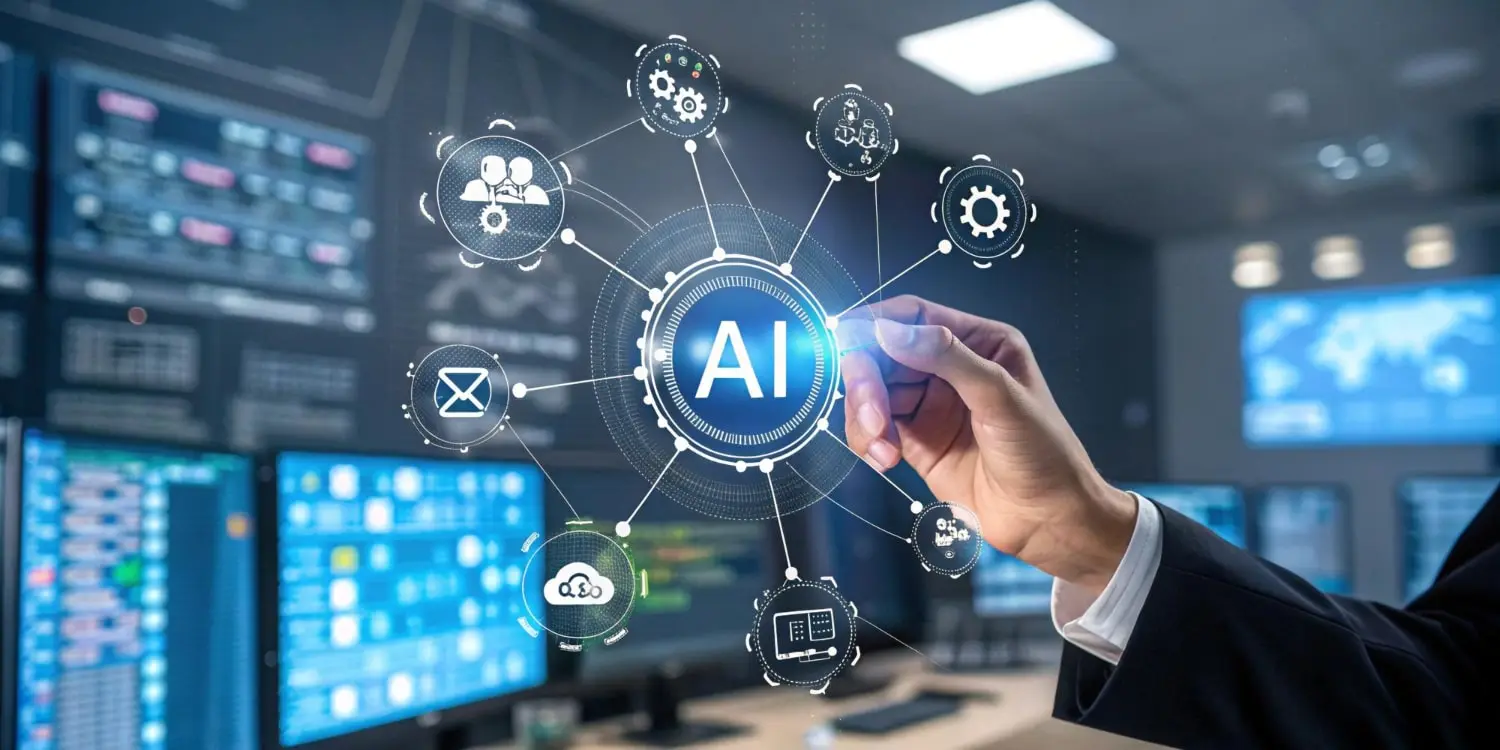
AIOps shifts IT operations into a model driven by pattern recognition, automation, and predictive insights. Modern environments generate streams of logs, metrics, traces, events, and tickets at a pace that outruns traditional monitoring. Teams require systems that correlate signals, forecast failures, and trigger actions before service interruptions spiral into outages.
AIOps brings that muscle to infrastructure, cloud workloads, container fleets, and service desks by treating operational data as a living system that feeds automation.
AIOps also provides a path away from firefighting. Instead of navigating alert storms or combing through dashboards, teams gain a data engine that connects symptoms to causes and recommends or triggers actions. As usage, traffic, and cloud consumption scale, outcomes center on MTTR reduction, cost control, and service reliability. The impact spans incident response, capacity planning, and customer experience.
Why IT Experts Can’t Ignore AIOps Anymore?
The explosion of logs, alerts, and telemetry data
Modern IT footprints stretch across on-premises clusters, SaaS tools, edge locations, and cloud regions. This distribution inflates the flow of operational signals. Logs multiply with microservices adoption. Container orchestration introduces short-lived workloads that emit thousands of signals per minute. Hybrid cloud adds layers of telemetry from storage, compute, networking, and managed services.
AIOps suits this scale because it analyses telemetry as a collective whole instead of isolating channels. It identifies patterns, seasonal trends, cluster-level anomalies, and workload irregularities through a unified data lens.
Key pressures behind adoption:
- Workloads generate exponential log growth that breaks manual workflows
- Alerts spike during peak hours, storms, or cascading issues
- Teams struggle to track dependencies in distributed architectures
Why traditional monitoring and ITSM tools fail at scale
Dashboards and static rules were built for stable, predictable environments. They struggle when workloads auto scale or when hundreds of microservices form a constantly shifting mesh. Traditional systems depend on thresholds that cannot respond to context, seasonality, or cross-domain signals.
Static tools also fragment operational awareness. One dashboard tracks CPU erosion. Another reports service desk queues. Yet another logs container restarts. Correlating these signals drains time during incidents. Patterns hide inside data silos.
How AIOps bridges alert fatigue, hybrid environments and tool silos
AIOps correlates signals from monitoring, observability, ITSM, CMDB, and cloud telemetry. It ties symptoms to their ripple effects by applying machine learning models that evolve over cycles of outages, peaks, code deployments, and resource fluctuations.
Benefits emerge through:
- Correlating alerts from different systems to shrink noise volume
- Detecting anomalies early by blending logs, traces, and metrics
- Linking service tickets with telemetry to guide incident responders

How AIOps Works: The Technical Workflow
Data ingestion across logs, metrics, traces, events and tickets
AIOps begins by feeding data from monitoring, APM systems, ITSM tools, cloud services, and network telemetry into a single stream. This step forms a unified foundation for analysis. It captures signals from storage arrays, message queues, API gateways, service desk tickets, change requests, container orchestrators, and cloud billing systems. Unified ingestion gives downstream models richer insight.
Teams gather:
- Logs from applications, proxies, serverless functions, and edge devices
- Metrics for resources, workloads, autoscaling groups, and DB clusters
- Traces for distributed transactions in microservice flows
Normalization and correlation powered by AI and ML
Once data enters the pipeline, AIOps cleans, normalizes, enriches, and correlates it. AI models group alerts, detect common root causes, remove duplicates, and elevate important signals. Correlation models study historical sequences of outages, deployments, configuration changes, and load spikes to find patterns that repeat.
Normalization also assigns context. A simple CPU surge on a VM means little without knowing whether a deployment occurred at that moment or whether a dependent service experienced latency. Context strengthens accuracy.
Predictive analytics for anomaly detection and capacity planning
AIOps engines forecast behavior by learning patterns from historical cycles. Models track usage variation, demand surges, cost patterns, resource burn rates, and seasonal fluctuations.
Predictive functions contribute value through:
- Anomaly detection that flags deviations early
- Capacity recommendations based on traffic and resource patterns
- Forecasted alerts that warn teams ahead of load surges
Closed-loop automation from insight to auto-remediation
Once analysis generates insights, AIOps feeds those insights into automation routines. Closed-loop workflows remove repetitive tasks, patch issues, scale resources, roll back deployments, and clean up unused capacity. Auto remediation shortens MTTR and cuts manual intervention.
Automation examples include:
- Restarting malfunctioning pods
- Blocking problematic API traffic patterns
- Triggering rollback when error rates rise
- Expanding or shrinking cloud resources based on forecasts

Real-World AIOps Use Cases: Transforming IT Operations
Automated root-cause analysis to reduce MTTR
Root-cause analysis wastes time when signals scatter across dashboards. AIOps correlates logs, events, traces, and ticket data, providing a ranked set of probable causes. Teams pinpoint faulty services, misconfigurations, unstable nodes, or problematic code paths in less time.
Use cases include:
- Rapid identification of misconfigured load balancers
- Finding faulty microservices inside distributed clusters
- Detecting recurring patterns tied to deploy cycles
Predicting and preventing outages before they impact users
AIOps identifies anomalies and trend deviations before they escalate. It catches rising error rates, unusual latency pockets, and slow resource burn that signals future saturation. This prevention reduces service incidents during business hours and supports peak-traffic stability.
Cloud resource optimization and cost control for hybrid infra
AIOps monitors consumption patterns, idle resources, overprovisioned clusters, and cost anomalies across cloud accounts. It recommends resource rightsizing, auto scaling, and workload redistribution. This supports hybrid environments by giving teams a single view of cloud usage.
Unified visibility for on-premises, cloud and microservices
Hybrid IT spreads workloads across VM clusters, Kubernetes, managed services, and virtual networks. AIOps merges these signals into one context. Teams study transaction paths, cross-region latency, and network flows without switching tools.
Intelligent service desk automation and faster ticket resolution
AIOps improves service desk operations by routing tickets, identifying recurring issues, and suggesting next steps. Its correlation with telemetry gives support teams technical context behind user-reported issues.

Business Impact and ROI: AIOps for IT Leadership
Quantifying downtime reduction and SLA improvement
AIOps boosts SLA stability by cutting MTTR, filtering noise, and predicting service degradation. By catching issues earlier and automating repetitive resolution steps, teams stabilize uptime. Outage duration shrinks, and SLA commitments gain consistency.
How automation reduces manual effort and headcount bottlenecks
Repetitive tasks drain operational bandwidth. Teams spend cycles clearing alerts, restarting workloads, running diagnostics, and responding to routine incidents. AIOps automation cuts this burden.
Automation reduces:
- Manual ticket investigation
- Handwritten diagnostic routines
- Time spent correlating symptoms
- Busywork tied to resource adjustments
Cost savings from proactive maintenance and cloud optimization
Operational costs shrink when workloads run within predicted bounds. Cloud bills drop when unused or oversized resources are removed. Maintenance costs fall when predictive alerts catch issues early.
Challenges in Adopting AIOps
Tool and data silos blocking visibility
Legacy stacks spread information across disconnected dashboards. Silos block correlation, hide dependencies, and delay incident response. AIOps requires unified data to function well, which means organizations must centralize telemetry sources.
Cultural shift from reactive to autonomous IT
AIOps adoption extends beyond technical integration. Teams must trust insights from machine learning and transition from manual triage to guided or automated remediation. This shift takes time. Operational habits must align with a model built around prediction and automation.
Choosing between domain-centric and domain-agnostic AIOps platforms
Domain-centric systems suit specialized environments such as networks or containers. Domain-agnostic engines serve heterogeneous stacks. Choosing the right model depends on footprint complexity, tool chains, and target outcomes.

AIOps Future: Autonomous, Predictive and Self-Healing IT Systems
Transition from observability to prediction, automation and autonomy
Enterprises progress through stages. First, they gather observability data. Next, they forecast behavior through prediction engines. Then they automate actions. Finally, they approach autonomy, where systems self-heal with minimal intervention.
Role of generative AI and LLMs in IT decision-making
Generative AI and LLMs enhance AIOps by interpreting logs, explaining incidents, summarizing root-cause chains, and suggesting corrective steps. They convert operational noise into guidance that supports both junior and senior engineers.
Zero-touch IT operations by 2030
Autonomous infrastructure aims at a future where systems detect issues, act on them, validate results, and escalate only when human approval is required. Zero-touch operations streamline governance and stabilize service quality for sprawling IT footprints.
AIOps Adoption Roadmap for IT Teams
Step 1: Assess monitoring and observability maturity
Teams begin by reviewing visibility gaps, monitoring coverage, noise patterns, and tool sprawl. The goal is to decide readiness for a data-driven automation model.
Step 2: Break silos and centralize telemetry
Unified telemetry feeds correlation models more accurate signals. Integrating logs, metrics, traces, events, tickets, and change data gives downstream predictions a stronger foundation.
Step 3: Start with one or two automation use cases before scaling
Pick low-risk use cases such as alert noise reduction, service restart automation, or repetitive ticket responses. Early wins help teams trust insights and pave the way for broader automation.
Step 4: Measure success using MTTR, SLA, cost and efficiency metrics
Metrics validate progress. MTTR reduction shows that insights guide resolution. SLA stability reflects better uptime. Cost trends show resource optimization. Team bandwidth improves as manual effort drops.
Interested in knowing more? Please visit https://infraon.io/infraon-aiops.html
Write to us to learn more about how Infraon AIOps can transform your daily work routines.