


In 2026, asset visibility holds a central role in IT planning. Teams track laptops, servers, mobile devices, SaaS subscriptions, cloud resources, contracts, warranties, and retirement records while supporting hybrid users and distributed offices.
A modern IT asset management platform turns scattered records into one working system for finance, IT, security, procurement, and service operations. That shared view helps teams cut waste, track ownership, plan refresh cycles, and keep audit data ready for review.
What Are IT Asset Management Tools?
IT asset management tools track hardware, software, cloud assets, contracts, and lifecycle events from procurement through retirement. The right platform keeps inventory current, maps users to devices, records financial data, flags renewals, and connects assets to tickets, approvals, and policy workflows.
Why ITAM matters in 2026
IT companies carry more moving parts than ever. SaaS growth, hybrid infrastructure, shorter device refresh cycles, and tighter governance have pushed ITAM into daily operations. Teams need one system that can surface asset sprawl, license risk, ownership history, and retirement records before costs rise further.
Key benefits of IT asset management software
Cost control: A solid ITAM platform shows where spend goes, which licenses carry low usage, which devices remain underused, and which renewals deserve attention before another billing cycle begins. That kind of visibility supports budget planning and purchasing decisions.
- Compliance readiness: Audit pressure rises when software usage, license rights, disposal history, and contract records live in disconnected systems. A central ITAM platform helps teams pull reports faster, track usage against entitlements, and maintain a reliable record of asset movement.
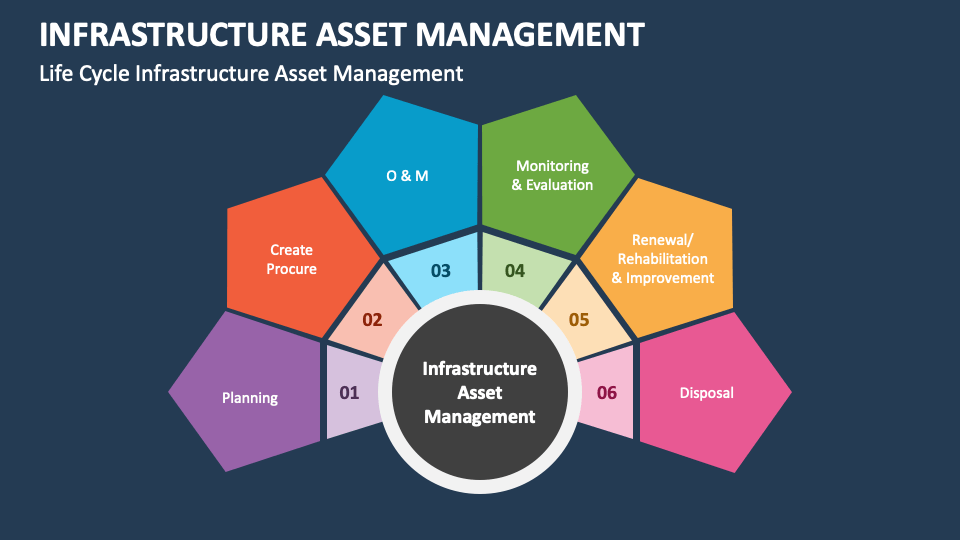
- Lifecycle tracking: Good ITAM software follows an asset from request to onboarding, maintenance, reassignment, repair, warranty, and retirement. Finance and IT teams gain one source for depreciation, ownership, and status changes, which reduces record gaps.
How to Choose the Best IT Asset Management Software
Start with identifying what the company actually needs to prioritize. A SaaS-heavy company may care most about app discovery and renewal data. A multi-site enterprise may care more about network discovery, hardware relationships, and service desk linkage. A regulated business may place policy, residency, and audit records near the top of the shortlist.
Must-have features
- Automated discovery: Discovery forms the base layer. Inventory accuracy drops fast when asset updates depend on spreadsheets or manual handoffs. Discovery should capture endpoints, network devices, software usage, and cloud resources with minimal friction.
- License management: License data should connect purchase records, usage levels, renewal dates, and entitlement tracking. That combination helps finance and IT spot waste early and prepare for vendor true-up discussions.
- SaaS tracking: SaaS tracking matters for shadow IT, duplicate subscriptions, inactive seats, and renewal planning. Teams need usage visibility plus a reliable record of owners, budgets, and business purpose.
- Integration with ITSM: Asset data grows more useful when incidents, requests, changes, and approvals connect to the same records. Service teams gain faster triage, richer history, and better context during root-cause analysis.
Deployment options
Cloud deployment suits teams that want faster rollout, lighter maintenance, and frequent product updates. On-premise or private cloud may fit companies that carry tighter hosting policies, internal network dependencies, or regional governance needs. The right choice depends on security policies, hosting preference, integration patterns, and internal resourcing.
Comparison Table of Top ITAM Tools
The table below compares ten popular IT asset management tools for 2026.
| Tool | Best fit | Deployment | Starting price | Why it stands out |
|---|---|---|---|---|
| Infraon Assets | Mid-market and enterprise teams that want ITAM plus service workflows | Cloud, private cloud | $136/month for 1,000 assets | Broad lifecycle coverage, ticketing integration, software asset management, compliance reports, agent-based and agentless discovery in higher tiers. |
| ManageEngine AssetExplorer | SMBs and hybrid environments | Cloud, on-premise | Custom by asset count | Practical fit for discovery, inventory, and software license management. |
| SolarWinds Service Desk | ITSM-led asset programs | Cloud | From $39/technician/month, asset pricing by quote | Good option for teams that want assets tied closely to service desk workflows. |
| ServiceNow IT Asset Management | Large enterprises | Cloud | Custom quote | Wide enterprise coverage for hardware, software, SaaS, and cloud cost control. |
| Lansweeper | Discovery-led visibility | SaaS, on-premise | $199/month billed annually | Discovery depth for IT, OT, cloud, and connected devices. |
| Zluri | SaaS-heavy companies | Cloud | Custom quote | Useful for app discovery, renewals, spend tracking, and SaaS governance. |
| SysAid | Service desk teams that need asset context | Cloud, on-premise | Custom quote | Connects service records and asset records in one operational flow. |
| Symphony Summit | Process-driven enterprise environments | Cloud | Custom quote | Lifecycle management, policy workflows, and ITIL-aligned coverage. |
| SapphireIMS | Lifecycle and audit control | Cloud, on-premise | $15/month listed on marketplace sources | Useful for procurement through retirement plus depreciation and audits. |
| Asset Panda | Mobile-first tracking | Cloud | $3,000/year | Handy for barcode and QR workflows plus field updates. |
Top 10 IT Asset Management Tools in 2026
1. Infraon Assets
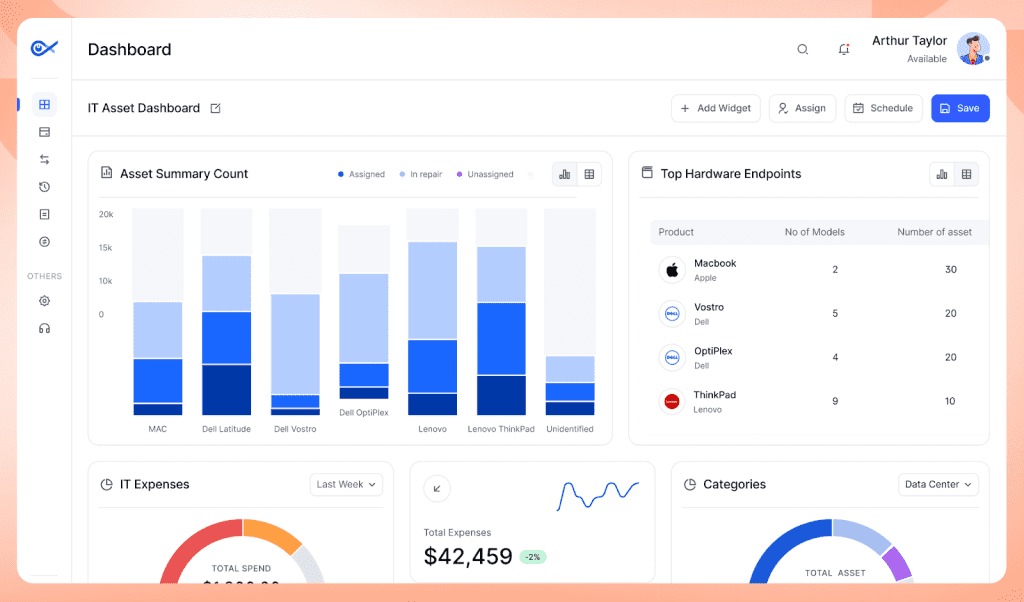
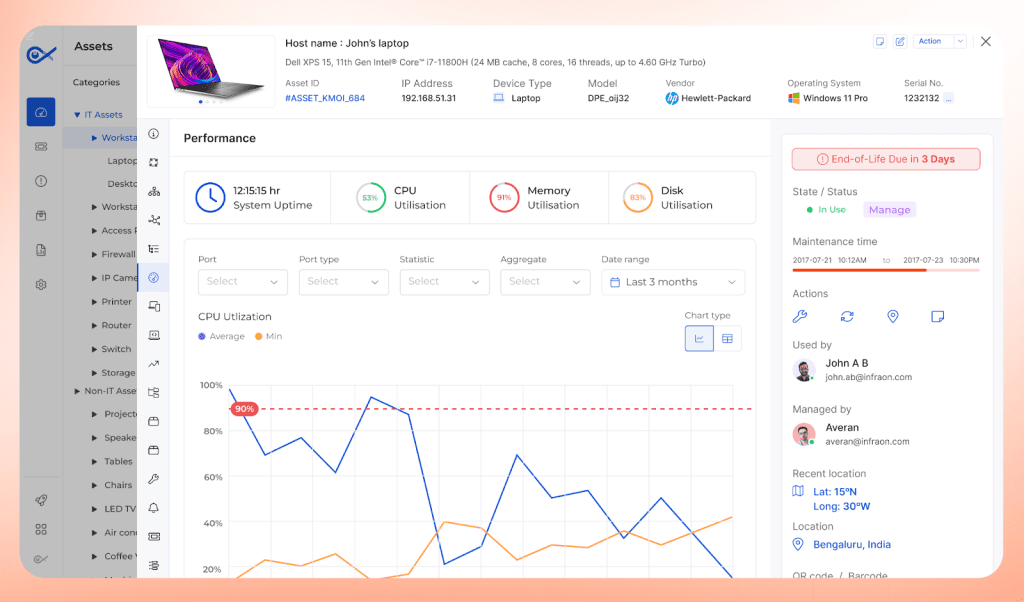
Infraon Assets covers a wide span of ITAM needs in one product family such as hardware asset management, lifecycle management, QR and barcode support, dashboards, reports, mobile app support, and ticketing integration at entry levels. Higher tiers expand into software asset management, compliance reports, discovery, network asset management, asset relationships, and private cloud deployment.
That breadth matters for buyers who want one platform to support procurement, service operations, compliance reporting, and day-to-day tracking. Teams can start with core visibility and grow into richer discovery and governance as the environment expands.
Public pricing starts at $136 per month for 1,000 assets, which makes the product accessible for growing teams while still leaving room for enterprise-scale depth.
G2 Review: 4.7/5
Gartner Review: 4.6/5
“The user-friendly IT asset management tool. One is their reporting structure, which can be customized and also scheduled. Also, any asset history can be exported in the form of a report.”
2. ManageEngine AssetExplorer
ManageEngine AssetExplorer remains a solid choice for SMBs that want dependable discovery plus software governance. The platform fits buyers who value inventory structure, agentless probes, and license tracking in a familiar IT operations setup.
3. SolarWinds Service Desk
SolarWinds Service Desk works well for teams that place service workflows at the center of asset operations. It suits organizations that want incidents, requests, contracts, and asset records connected in one service-led environment.
4. ServiceNow IT Asset Management
ServiceNow fits large enterprises that need asset, cloud, workflow, and financial data on one broad platform. The product tends to attract large organizations with complex processes, multiple teams, and mature governance requirements.
5. Lansweeper
Lansweeper shines in discovery-led environments where teams need a fast view of IT, OT, cloud, and connected assets. It suits organizations where inventory depth and visibility across varied environments carry high priority.
6. Zluri
Zluri serves SaaS-heavy companies that care about app sprawl, shadow IT, renewals, and spend control. It fits buyers who want a sharper lens on app usage, owners, duplicate subscriptions, and renewal planning.
7. SysAid
SysAid fits service desk teams that want asset tracking woven into daily support work. It can work well for companies that value service context, workflow linkage, and faster triage during issue handling.
8. Symphony Summit
Symphony Summit suits enterprises that want lifecycle control, policy workflows, and ITIL-led process depth. It appeals to organizations that value process maturity and structured operational governance.
9. SapphireIMS
SapphireIMS works well for teams that care about procurement, depreciation, audits, and retirement history alongside service workflows. It suits companies where lifecycle records and finance-linked reporting carry extra weight.
10. Asset Panda
Asset Panda earns attention from organizations that value mobile-first tracking and field updates. It fits operations that rely on barcode or QR workflows and need staff to update asset status from varied locations.
IT Asset Management Trends in 2026
- AI-powered asset discovery: Discovery tools are moving beyond static inventory capture. Teams now expect smarter classification, faster reconciliation, anomaly signals, and richer insights around ownership and usage patterns.
- FinOps and SaaS cost optimization: Finance and IT teams are working closer together as SaaS and cloud spend continue to climb. ITAM platforms now play a larger role in budget planning, renewal review, duplicate subscription control, and usage-based spend decisions.
- ITAM plus ITSM convergence: Asset data carries more value when requests, incidents, changes, and approvals share the same records. That convergence helps service teams move faster while giving leadership a better operational picture.
Regional Considerations for ITAM Adoption
India
Indian enterprises continue to place data governance, device visibility, and cost discipline high on the agenda. Asset ownership mapping, disposal records, usage tracking, and policy alignment matter more as companies manage larger user bases and mixed work models.
UAE and Saudi Arabia
In the Gulf, residency, governance, and audit readiness carry extra weight during enterprise buying cycles. Deployment choice, workflow records, contract visibility, and lifecycle reporting often guide buying decisions in a major way.
Indonesia and Malaysia
In Southeast Asia, cloud growth moves in step with rising governance expectations. That mix increases demand for ITAM systems that can support cloud-first operations while keeping ownership, usage, and compliance records in one place.
What Modern Enterprises Should Prioritize
The best platform for 2026 depends on where the biggest pressure falls. Some teams need richer discovery. Others care more about SaaS governance, mobile tracking, service workflow linkage, or financial visibility. A sound shortlist process should look at lifecycle depth, deployment fit, reporting maturity, service integration, and pricing model before a final decision.
Final Thoughts
IT asset management now covers far more than inventory logging. In 2026, it supports cost governance, audit readiness, lifecycle planning, service speed, and executive visibility. Teams that invest in the right platform gain a better grip on ownership, spend, usage, and operational risk.