



Asset Management in Healthcare is essential for ensuring hospitals can efficiently track and manage the hundreds or thousands of assets that support daily operations. Medical devices, laptops, tablets, IoMT equipment, consumables, and other shared assets constantly move between departments, wards, laboratories, storage areas, and satellite facilities, making real-time visibility critical for clinical care, IT operations, inventory control, and regulatory compliance.
When asset data depends on manual logs or disconnected tools, teams spend time searching, reordering too early, repairing late, or working with partial data.
Healthcare asset management gives hospitals a structured way to track assets from purchase to use, maintenance, transfer, and retirement. Therefore, modern healthcare inventory management software brings medical and IT assets into a unified view, so biomedical, facilities, IT, and operations teams can coordinate work, reduce downtime, and keep patient-facing services running with greater control.
What Is Healthcare Asset Management
Difference between asset management and inventory management in healthcare
Healthcare asset management covers the full life of a hospital asset. It records ownership, location, condition, maintenance history, user assignment, warranty, compliance data, and retirement status. Inventory management focuses on stock quantities, replenishment, usage, and reorder planning for consumables and supplies. Hospitals need both because a missing infusion pump and a shortage of consumables create very different operational problems.
A mature program connects asset records with inventory data, service history, and operational workflows. This helps teams know where assets are, who uses them, when service is due, and which items should be repaired, replaced, or reallocated.
Types of assets that hospitals need to track
Hospital asset data spans clinical equipment and digital infrastructure. The tracking model should cover movable assets, fixed assets, shared devices, and stock items that flow through clinical and administrative teams.
- Medical devices such as monitors, pumps, imaging equipment, beds, and diagnostic units
- IT assets such as laptops, desktops, servers, printers, scanners, and network devices
- Mobile devices such as tablets, handheld terminals, and clinical communication devices
- Consumables such as supplies, kits, and items with usage or expiry controls
- IoMT equipment connected to hospital networks and clinical systems
Why Asset Management Matters in Modern Healthcare
Rising operational costs
Hospital budgets face pressure from equipment purchases, service contracts, consumable use, repairs, and replacement cycles. Poor visibility leads to duplicate purchases, idle assets, missed warranty claims, and avoidable rentals. A central asset system helps finance, procurement, and operations teams see where money is tied up and where reuse or maintenance planning can reduce waste.
Equipment downtime and delayed care
When a device is unavailable, staff lose time searching or escalating requests. In high-volume departments, that delay can affect patient flow, bed turnover, diagnostic schedules, and care coordination. Asset tracking reduces search time and helps teams act before service issues interrupt clinical work.
Compliance and audit challenges
Hospitals need dependable records for device maintenance, calibration, user assignment, asset location, disposal, and audit reviews. Manual records often leave gaps. A digital asset trail gives teams a reliable history that can be reviewed during internal checks, external audits, and accreditation activity.
Multi-hospital asset visibility issues
Healthcare groups with many branches often struggle to see asset availability across locations. A unified system helps central teams compare usage, move underused equipment, plan maintenance, and track devices that shift between hospitals, clinics, labs, and storage sites.
15 Key Benefits of Healthcare Asset Management
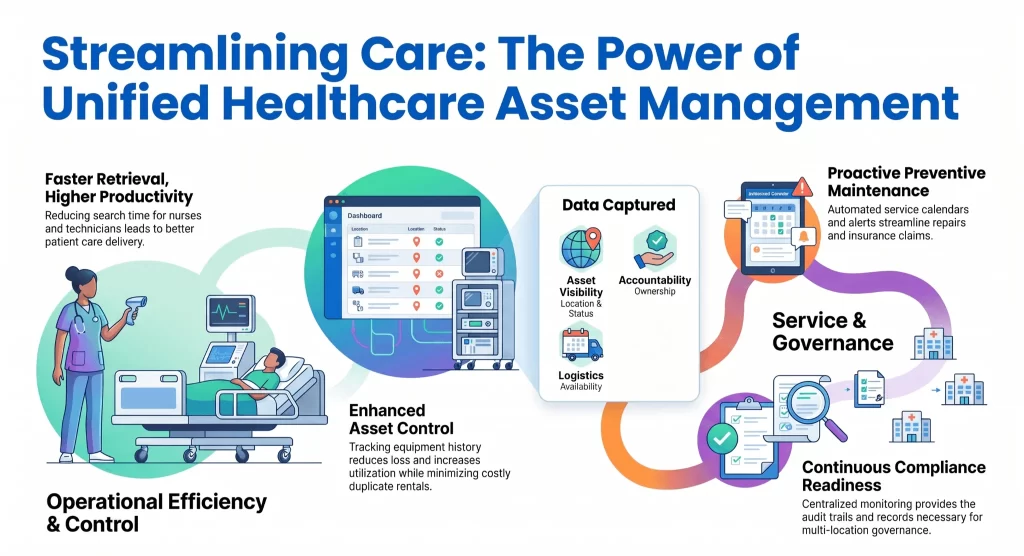
| Benefit | Operational value |
| Real-time asset visibility | Teams can see location, status, ownership, and availability from a shared system. |
| Faster equipment retrieval | Nurses, technicians, and biomedical teams spend less time searching for devices. |
| Reduced asset loss | Tagged assets with movement history help reduce misplaced or unreturned equipment. |
| Improved preventive maintenance | Service calendars and alerts help teams act before breakdowns affect care. |
| Better patient care delivery | Available equipment helps clinical teams move faster through diagnosis, treatment, and follow-up. |
| Lower operational costs | Hospitals reduce duplicate purchases, rushed rentals, and avoidable repairs. |
| Smarter inventory planning | Usage patterns guide stock levels, reorder points, and supplier planning. |
| Improved compliance readiness | Maintenance logs, audit trails, and disposal records remain easier to review. |
| Higher equipment utilization | Underused assets can be reassigned before new purchases are approved. |
| Reduced manual tracking | Digital records replace spreadsheets, paper logs, and scattered updates. |
| Better biomedical engineering output | Technicians can prioritize work orders using asset condition and service history. |
| Centralized multi-location monitoring | Regional teams can review asset movement and availability across facilities. |
| Improved IT and medical asset coordination | IT, biomedical, and operations teams work from shared asset data. |
| Better data-driven decisions | Procurement and replacement choices can rely on usage, cost, and downtime trends. |
| Enhanced staff productivity | Staff spends less time chasing assets and gain time for clinical or operational work. |
Common Challenges Hospitals Face in Asset Tracking
Missing medical equipment
Shared devices move quickly between rooms, departments, and shifts. When location records lag, the same asset may appear available in the system while staff cannot find it on the floor. Barcode, RFID, and mobile updates reduce this gap by capturing movement closer to real use.
Overstocking and understocking
Manual stock planning creates two risks. Hospitals may hold extra inventory that ties up cash, or they may run short of items needed for routine work. Automated inventory monitoring helps teams plan based on real usage and reorder thresholds.
Manual spreadsheet dependency
Spreadsheets work for small lists, but they break down when assets move daily, require service, or belong to many departments. Data becomes outdated, ownership gets disputed, and reporting turns into manual effort before every review.
Compliance risks
Missing service records, incomplete disposal data, and untracked devices can create audit exposure. A healthcare asset system records asset history across assignment, repair, maintenance, and retirement.
Lack of lifecycle visibility
Hospitals need to know which assets are new, active, under repair, due for replacement, retired, or awaiting disposal. Lifecycle visibility helps procurement and operations avoid last-minute decisions.
How Healthcare Inventory Management Software Works
Healthcare inventory management software connects asset data, tracking technologies, maintenance workflows, and reporting. It gives teams a practical way to manage fast-moving assets, service schedules, and inventory levels from one operational view.
- Barcode and RFID asset tracking capture asset movement, assignment, and location changes
- Automated inventory monitoring tracks stock levels, reorder thresholds, and usage trends
- Maintenance scheduling flags upcoming service, calibration, inspection, and repair tasks
- Asset lifecycle management tracks purchase, deployment, usage, service, transfer, and retirement
- Reporting and analytics convert asset data into views for operations, procurement, compliance, and leadership
Best Practices for Healthcare Asset Management
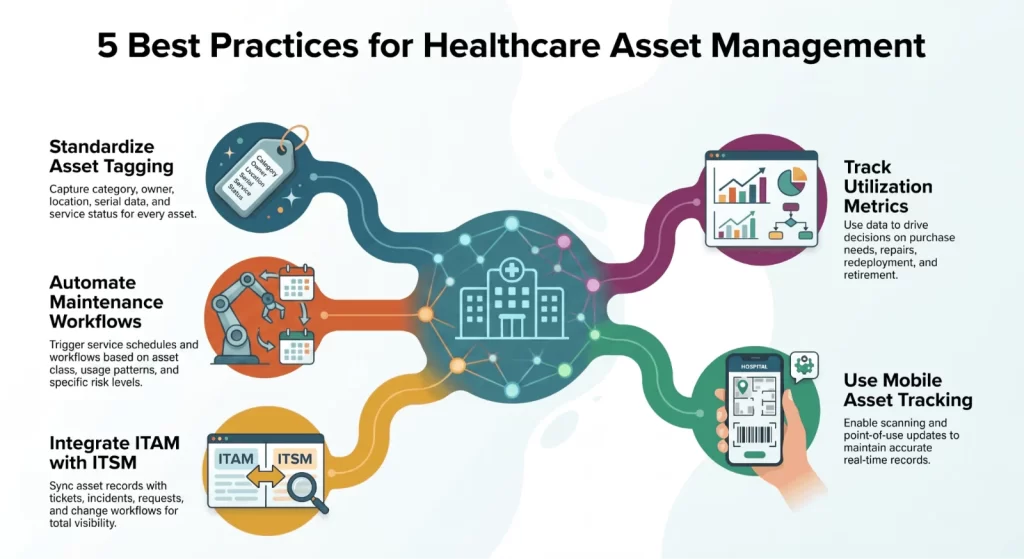
Standardize asset tagging
A consistent tagging model helps teams identify assets across departments and branches. Asset tags should link to category, owner, location, serial data, service status, and lifecycle stage.
Automate maintenance workflows
Preventive maintenance should trigger from asset class, service schedule, usage patterns, or risk level. Automated work assignment helps biomedical and facilities teams reduce delays and missed tasks.
Integrate ITAM With ITSM
Hospitals benefit when IT assets connect with tickets, incidents, service requests, and change workflows. A laptop, scanner, network device, or IoMT asset can then be traced from service issue to asset record.
Track asset utilization metrics
Usage data helps teams decide whether to purchase, redeploy, repair, or retire assets. It also helps leadership compare asset demand across departments and locations.
Enable mobile asset tracking
Hospital staff need updates near the point of use. Mobile scanning and field updates help teams record movement, assignment, and service activity while work is happening.
Features to Look for in a Healthcare Inventory Management System
| Feature | Why hospitals need it |
| Real-time tracking | Asset location, user, status, and movement history available to relevant teams. |
| CMDB integration | IT assets connected with configuration data, dependencies, incidents, and changes. |
| Predictive maintenance | Maintenance planning based on service history, risk, usage, and condition trends. |
| Cloud access | Secure access for multi-location teams, administrators, and field users. |
| Multi-hospital coverage | Shared visibility across hospitals, clinics, labs, and regional facilities. |
| Compliance reporting | Records for audits, service history, calibration, ownership, and disposal. |
Why Hospitals Are Moving Toward Unified IT and Medical Asset Management
Rise of IoMT devices
IoMT devices connect clinical equipment with digital systems, networks, and patient workflows. This creates overlap between biomedical engineering and IT operations. A unified system helps both teams see connected devices, service status, ownership, and operational risk.
Smart hospital initiatives
Smart hospital programs depend on connected assets, automated workflows, and data-led operations. Asset management gives these programs a practical data layer for service planning, device use, procurement, and staff coordination.
AI-driven asset analytics
AI-based analytics can help teams identify usage patterns, repair trends, asset loss patterns, and equipment nearing service risk. The value comes from reliable asset data captured over time.
Centralized healthcare operations
Central operations teams need a system that connects inventory, maintenance, IT assets, and medical devices. Centralization helps leadership compare branches, plan budgets, and reduce repeated work between teams.
How Infraon Helps Healthcare Organizations Manage Assets
Infraon IT Asset Management Software helps healthcare teams bring IT assets, lifecycle data, workflows, monitoring, and alerts into a unified operating view. Hospitals can track assets across locations, record ownership, automate lifecycle steps, and connect asset data with IT service operations. This helps clinical and IT teams respond faster when assets move, fail, expire, or require service.
For healthcare groups with many departments or branches, Infraon can help:
- View the asset status
- Automate recurring tasks
- Keep asset records aligned with tickets, service requests, and operational reporting
- Gain control over equipment, IT assets, and inventory data that affects patient care and hospital uptime
FAQs About Asset Management in Healthcare
What is healthcare asset management?
Healthcare asset management is the process of tracking medical devices, IT assets, mobile equipment, consumables, and connected healthcare equipment through their full lifecycle. It covers location, ownership, condition, service history, maintenance, transfer, and retirement.
What is the difference between asset management and inventory management in healthcare?
Asset management tracks the full life and condition of equipment or devices. Inventory management tracks stock levels, use, replenishment, and expiry. Hospitals need both because equipment availability and stock availability affect clinical work in different ways.
Why do hospitals need healthcare inventory management software?
Hospitals need healthcare inventory management software to reduce manual tracking, manage stock levels, find equipment faster, plan maintenance, and prepare audit records. It gives clinical, biomedical, IT, and operations teams a shared operational view.
What technologies are used in healthcare asset tracking?
Hospitals often use barcodes, RFID, mobile scanning, automated alerts, asset lifecycle dashboards, maintenance scheduling, and reporting analytics. IoMT assets may also connect asset data with network and service operations.
How does asset management improve patient care?
Asset management improves patient care by reducing equipment search time, repair delays, inventory gaps, and downtime. When clinical teams have working equipment available, patient movement through diagnosis, treatment, and recovery becomes faster and easier to coordinate.