


What Is IT Operations Management (ITOM)?
IT Operations Management guides how organizations run, track, and support their infrastructure across cloud-native and hybrid environments. Teams use ITOM to maintain stable services, govern assets, and align operations with long-term performance goals. Through structured monitoring, discovery, observability, and workflow automation, IT Operations Management creates a dependable path for scaling digital ecosystems with confidence.
IT Operations Management offers a structured view of operational practices that support stronger service outcomes. Expanding ITOM maturity also helps organizations strengthen diagnostics, reduce operational friction, and sharpen resource planning.
Definition and scope
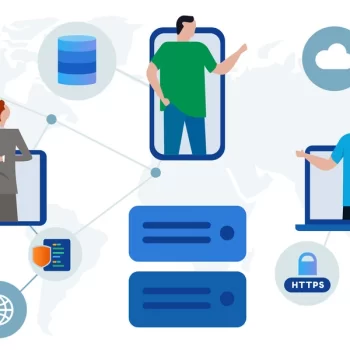
IT Operations Management spans infrastructure oversight, network assurance, application availability, and lifecycle care for hardware and software. Under ITOM, organizations maintain reliable runbooks for daily functions such as configuration, discovery, monitoring, alerts, and performance oversight. As hybrid models expand, the scope of ITOM grows into asset visibility, service mapping, analytics, and guided response patterns.
ITOM vs. ITSM: Understanding the difference
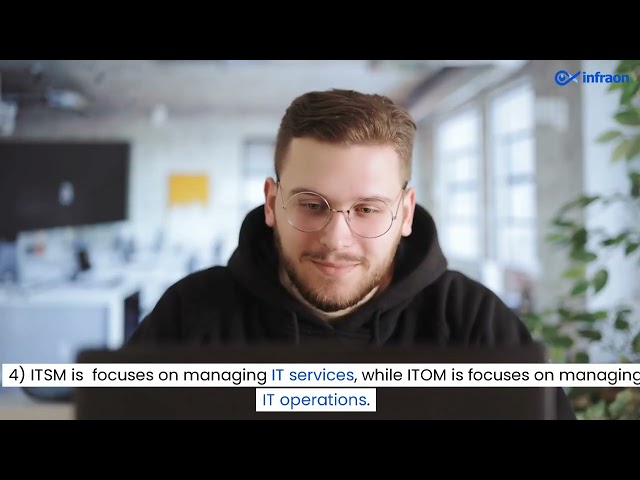
ITSM shapes service workflows, user-facing interactions, and structured request handling. IT Operations Management covers system-wide reliability, monitoring depth, and continuous oversight across servers, networks, storage layers, and applications. ITOM also works with ITSM through shared data points such as discovery outputs, CMDB enrichment, alert streams, and service structures.
Why ITOM matters for modern enterprises
Growth in cloud-native systems, distributed workforces, and connected assets pushes leaders to strengthen operational foundations. IT Operations Management strengthens resilience for uptime, security posture, and continuous service flow.
Many enterprises also treat ITOM as a force multiplier that boosts visibility, reduces firefighting cycles, and supports scaling.
Core Components of IT Operations Management
IT Operations Management builds its value through structured domains that unify infrastructure oversight, event intelligence, and analytics. Teams embedding ITOM within daily workflows elevate stability, remove blind spots, and align digital systems with organizational goals.
Infrastructure and asset management
Infrastructure and asset operations guide how teams track devices, servers, and distributed systems. Discovery frameworks identify resources across cloud, on-premises, and distributed sites while lifecycle care supports governance for purchase, usage, patching, and retirement.
- Discovery and CMDB: Discovery engines scan network segments, applications, containers, and endpoints. CMDB structures then store configuration values, status indicators, and relationship maps for assets.
- Device Server and Network Monitoring: Monitoring practices check resource usage, health parameters, error logs, uptime cycles, and bandwidth conditions. Teams gain stable alerts that point toward runtime anomalies, saturation risks, or service dips.
Event management and observability
Event intelligence supports triage by clustering alerts, detecting anomalies, and providing unified dashboards. Observability expands visibility into logs, metrics, traces, and behavioral shifts.
- Real-time monitoring: Real-time telemetry captures application flows, system changes, sensor states, and latency shifts as they unfold.
- Correlation and root cause analysis: Correlation engines group alerts by pattern. Root cause systems highlight failure drivers, dependency faults, or bottlenecks.
Incident problem and change management
Incident care offers structured handling of outages, performance dips, and user-impacting disruptions. Problem workflows reduce recurrence through deeper analysis. Change processes govern updates across kernels, networks, application builds, or security layers.
Performance and capacity management
Capacity forecasting covers resource saturation, growth spikes, and consumption curves. Performance care aligns workloads with utilization insights, resulting in balanced operations during surge periods.
Automation orchestration and AIOps
Automation sequences replace manual tasks with rules-based actions. Orchestrated flows integrate provisioning, scaling, patching, and backup cycles. AIOps patterns enhance insights by pairing analytics with event streams, reducing noise and exposure to repeat incidents.

Common Challenges in IT and Operations Management
Complexity of hybrid and multi-cloud environments
Hybrid architectures merge on-premise workloads with SaaS layers, VMs, containers, and distributed data centers. Multi-cloud setups add shifting interoperability rules, varied API behavior, and diverse monitoring expectations.
Alert fatigue and noise
High-volume alerts dilute attention, making critical failures harder to catch. Teams require event correlation, priority scoring, and noise suppression tied to real risk patterns.
Skills gaps and resource constraints
Rapid shifts in cloud-native stacks, observability, Kubernetes, and automation pipelines complicate staff planning. Upskilling programs must match deployment pace.
Balancing innovation and stability
Leaders must drive modernization while sustaining operational calm. Rapid advancement across frameworks also pushes teams to assess long-term suitability of tooling and processes.
Cost overruns and technical debt
Legacy systems, unmanaged assets, shadow IT, and fragmented tooling inflate operational overhead. Technical debt grows when updates stall or when monitoring gaps persist.
Best Practices for Effective ITOM
Organizations that follow structured IT Operations Management practices secure stronger performance outcomes, smoother scaling, and healthier operational cultures.
Implementing asset discovery and configuration management
Asset discovery captures real-time inventory while CMDB maps relationships. This reduces blind spots and creates a dependable foundation for planning.
Adopting a service-oriented business-centric approach
Service thinking links assets and workflows to business outcomes. Teams map dependencies, align maintenance cycles with service demands, and link capacity with usage.
Leveraging automation and orchestration
Automation removes repetitive tasks, while orchestration drives end-to-end sequences for provisioning, deployment, and scaling.
Incorporating AIOps and predictive analytics
AIOps applies analytics, anomaly scoring, and behavior learning to operational data. Predictive models anticipate failure patterns before issues surface.
Embracing DevOps SRE principles
SRE and DevOps practices embed observability, performance targets, release discipline, and continuous learning into ITOM.
Continuous capacity and performance optimization
Continuous optimization sharpens capacity planning, workload alignment, and performance tuning during peak cycles.
How Infraon Infinity Supports IT Operations Management
Infraon Infinity extends IT Operations Management through unified visibility, automation, and analytics across infrastructure. The suite blends ITSM, ITAM, and ITOM, creating a structured route toward stronger outcomes.
Single-suite, unified platform
Infraon Infinity merges multiple operational layers into a single experience. Teams align tickets, assets, alerts, reports, and discovery outputs through unified workflows.
Intelligent discovery and root cause diagnostics
Discovery modules scan networks, cloud accounts, and devices. Diagnostic engines highlight fault origins across servers, applications, network segments, or workloads.
Real-time event management and automated remediation
Event pipelines process alerts through correlation, classification, and pattern detection. Automated remediation reduces manual tasks while driving consistent turnaround.
Server and application monitoring with UI dashboards
Monitoring tools visualize load, latency, failures, transaction flow, and uptime behavior through intuitive dashboards.
Software asset lifecycle and compliance management
Infraon Infinity supports license governance, usage tracking, compliance alignment, and lifecycle care for applications across regions and teams.
SLA management and role-based governance
SLA structures guide expectations, uptime goals, and service quality metrics. Role-based governance enforces permission scopes for users, admins, and auditors.
AI ML-driven insights and predictive alerts
AI models highlight anomalies, saturations, performance dips, and security triggers. Predictive alerts guide preventive action.
Implementation Guide: Getting Started with Infraon for ITOM
Assessing your current ITOps maturity
Teams begin by reviewing infrastructure complexity, monitoring stack depth, alert hygiene, and process adherence. This prepares the foundation for strategic rollout.
Planning discovery use cases and KPIs
A planning cycle should define discovery zones, operational use cases, compliance goals, and KPIs that match organizational priorities.
Deployment strategy (modular rollout)
Modular adoption spreads deployment across discovery, monitoring, event intelligence, automation, and service flows, reducing friction.
Training and adoption
Workshops, documentation, and guided sessions help teams absorb new workflows with confidence.
Measuring success and optimizing
Success metrics track alerts cleared, MTTR reductions, automation hits, outage cycles, and resource forecast accuracy.
Future Trends in IT Operations Management
IT Operations Management continues to expand as organizations shift toward cloud-native architectures, distributed systems, and AI-driven operational models.
The rise of AIOps and Generative AI in ITOps
AIOps transforms operational oversight by analyzing telemetry, patterns, and event clusters with intelligent algorithms. Generative models enhance troubleshooting through guided suggestions for remediation and planning. Future deployments may combine behavioral analysis with workflow automation to accelerate root-cause paths and reduce operator strain.
Observability in cloud-native architectures
Cloud-native systems introduce microservices, API meshes, container chains, and dynamic scheduling. Observability positions logs, metrics, and traces as a unified stream so operators can visualize flows across distributed workloads. Future models bring wider support for auto-instrumentation and event stitching, helping teams map dependencies with greater accuracy.
Autonomous operations and self-healing infrastructure
Autonomous functions emerge as rules-driven engines that respond to common failures without manual triggers. Recovery workflows may address memory leaks, service stalls, routing misalignments, and saturation scenarios. Self-healing frameworks expand into multi-cloud zones, bringing immediate remediation to network drops, misconfigurations, or degraded nodes.
Sustainability FinOps and green ITOps
Sustainability trends guide cloud resource planning, capacity governance, and hardware consumption. FinOps strengthens budgeting discipline through consumption analysis and rightsizing. Green initiatives influence IT Operations Management by encouraging energy-aware deployments, optimized cooling strategies, and renewable-aligned infrastructure decisions.
Conclusion
IT Operations Management forms the core operational discipline that keeps modern digital ecosystems running at scale. As infrastructures grow across cloud, edge, and distributed assets, ITOM provides structure for monitoring, discovery, observability, automation, and long-term performance care. Strategic adoption strengthens operational maturity by aligning daily workflows with service continuity, risk reduction, and data-informed planning.
Infraon Infinity brings ITSM, ITAM, and ITOM together in one suite, with intelligent discovery, guided diagnostics, predictive alerts, and automated remediation powering smoother operational flow for enterprises seeking dependable outcomes through unified governance.
If you want us to show you exactly how this platform can be a game-changer, please visit Infraon Infinity. Or write to us and ask for a demo!