


Software asset management software gives organizations visibility into every software application, license, and subscription across their environment. It discovers what is installed. It tracks license entitlements. It monitors usage. It identifies over-licensing and under-licensing. It automates compliance reporting.
Why it matters in 2026: The SaaS explosion
The average enterprise now uses more than 300 software-as-a-service applications. Each application comes with its own license model, renewal date, and usage terms. Spreadsheets cannot track this complexity. Manual audits cannot keep pace. Software Asset Management tools provide the only scalable solution for modern software portfolios.
Key Benefits of Software Asset Management Tools
Cost optimization
Software Asset Management tools identify unused licenses. An enterprise with 5000 Microsoft 365 seats may find that 800 seats have been inactive for ninety days. Canceling those seats saves USD 240,000 annually. The tool pays for itself in the first month of discovery.
License compliance
Software vendors audit their largest customers. Non-compliance results in penalties often reaching millions. Software Asset Management tools maintain continuous compliance. They compare installations against entitlements. They flag over deployments before auditors arrive.
SaaS visibility
Finance departments often discover SaaS subscriptions purchased by individual teams. Marketing bought a project management tool. Sales bought another. Human Resources bought a third. SAM tools discover these shadow subscriptions. Central procurement regains control.
Audit readiness
When a vendor announces an audit, most enterprises panic. They scramble to collect data. They pray the numbers align. SAM-certified organizations respond differently. They export the audit report in minutes. They sleep soundly.
SAM Tools vs. Manual Tracking
| Feature | SAM Tools | Manual Tracking |
|---|---|---|
| Accuracy | High, automated discovery eliminates human error | Low, spreadsheets drift from reality within weeks |
| Automation | Yes, continuous discovery and reconciliation | No, every update requires manual entry |
| Compliance | Strong, real time alerts for over deployment | Risky, problems discovered only during audits |
How to Choose the Right Software Asset Management Tool
Company size fit
Small businesses need simple discovery and basic reporting. Mid-market organizations need deeper optimization features and integration with procurement. Enterprises need global visibility, multicurrency support, and advanced compliance automation.
Deployment (Cloud vs. on-premises)
Cloud Software Asset Management tools offer faster deployment and automatic updates. On-premises tools provide control for regulated industries. Choose the cloud for speed. Choose on-premises for air-gapped environments. Many vendors offer both options.
Integration capability
A SAM tool alone provides value. A SAM tool integrated with ITSM, CMDB, and procurement systems transforms operations. Check native connectors for your existing platforms. Verify API flexibility for custom connections.
Pricing model
Vendors charge by device, by user, or by subscription. Some add fees for advanced features like SaaS discovery or contract management. Calculate the total cost for your exact environment. Ask about overage policies. Request a three-year price lock.
Regional compliance
Malaysian enterprises must comply with local software laws. European customers need GDPR alignment. Gulf region clients require data residency. Verify your SAM tool meets your regulatory requirements before signing.
10 Best Software Asset Management Tools in 2026
1. Infraon Assets
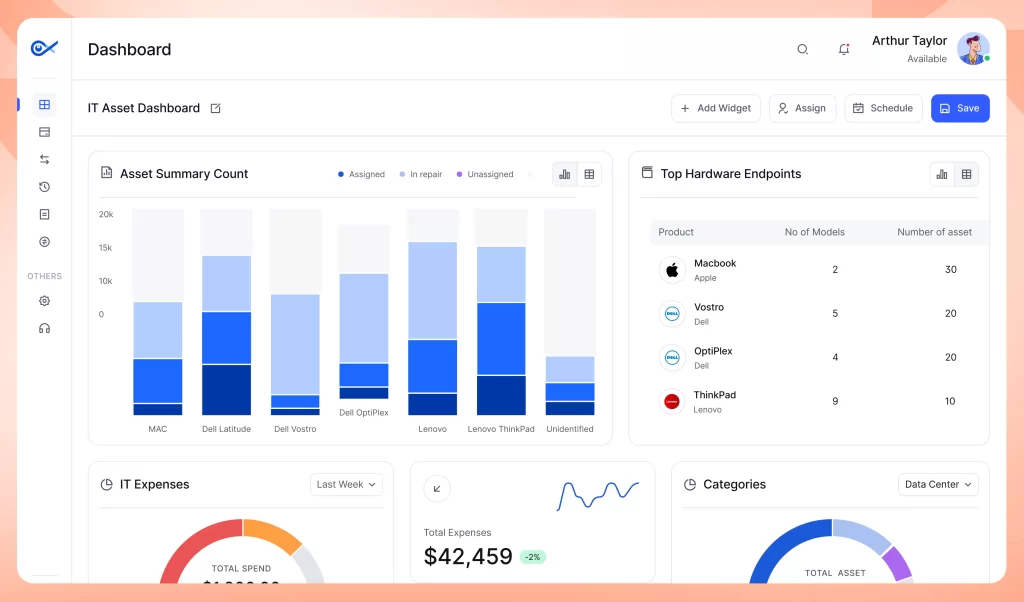
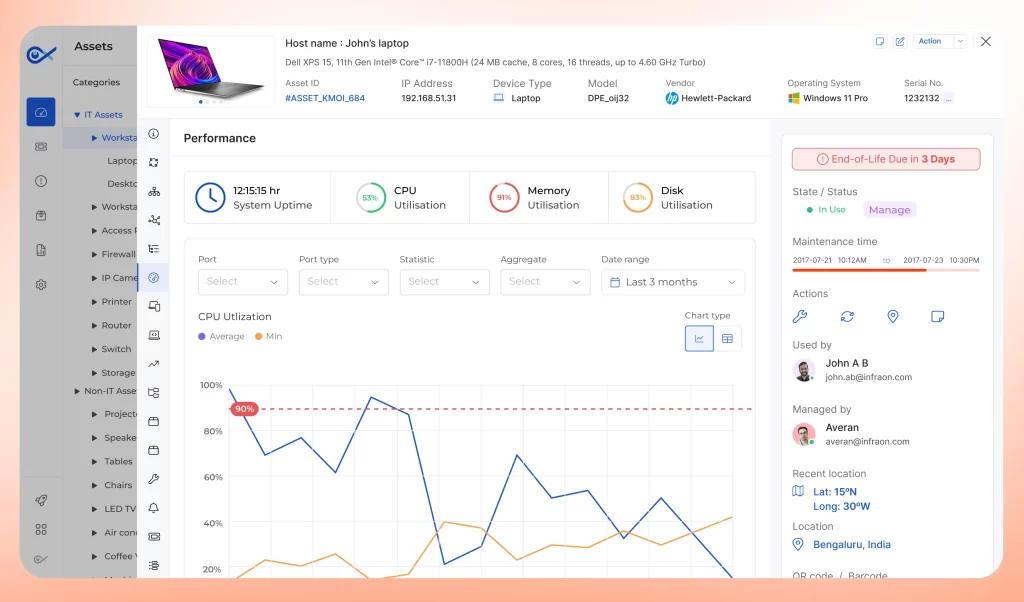
Infraon Assets delivers unified hardware and software asset management for enterprises across Asia and the Middle East. The platform discovers software installations through agent-based and agentless methods. It tracks license entitlements continuously. It generates audit-ready reports on demand.
Key Features
- Real-time asset tracking across hybrid environments
- SaaS and on-premises visibility in one dashboard
- Compliance management with automated alerts
- Native integration with Infraon ITSM
- Built in BI dashboards for license optimization
| Pros | Cons |
|---|---|
| All in one platform for hardware and software | Less known outside Asia Pacific markets |
| 60% faster deployment than enterprise average | |
| Local support for Malaysian and Indonesian customers | |
| Transparent pricing with no hidden modules |
2. ServiceNow
ServiceNow SAM Pro sits within the Now Platform, offering enterprise-grade software asset management for global organizations. It manages licenses for major publishers, including Microsoft, Adobe, and SAP. It automates the full software lifecycle from request to retirement.
Key Features
- Integration with ServiceNow CMDB and ITSM
- Software discovery and normalization
- License reclamation and optimization
- Contract and entitlement management
| Pros | Cons |
|---|---|
| Best in class for enterprises already using ServiceNow | Expensive for SAM only use cases |
| Deep publisher toolkits for major vendors | Requires significant implementation investment |
| Global support and partner ecosystem | Overkill for organizations under 2000 employees |
3. Zluri
Zluri focuses exclusively on SaaS discovery and management. It connects to single sign-on providers, finance systems, and API gateways to discover every cloud application. It identifies unused subscriptions and automates license reclamation.
Key Features
- SaaS discovery from five data sources
- Automated user access reviews
- App usage analytics
- Renewal calendar and alerts
| Pros | Cons |
|---|---|
| Purpose built for the SaaS first enterprise | Limited traditional software license management |
| Easy to deploy with API based connections | No on premises discovery option |
| User friendly interface for non-technical admins |
4. Matrix42
Matrix42 provides unified endpoint management with embedded SAM capabilities. The platform discovers software across physical, virtual, and cloud environments. It delivers license optimization recommendations based on actual usage data.
Key Features
- Software usage metering
- License reconciliation engine
- Contract lifecycle management
- Integration with Matrix42 service management
| Pros | Cons |
|---|---|
| Strong European presence and GDPR compliance | Less known in Asia Pacific markets |
| Combines SAM with endpoint management | Interface considered dated by some users |
| Flexible deployment options |
5. Cloudaware
Cloudaware positions itself as a CMDB for cloud and on-premises assets. Its SAM module discovers software in AWS, Azure, Google Cloud, and traditional data centers. It tracks licenses across hybrid architectures.
Key Features
- Multi-cloud software discovery
- License normalization across cloud marketplaces
- Cost and compliance dashboards
- Automated audit reporting
| Pros | Cons |
|---|---|
| Excellent for cloud native organizations | Traditional on premises discovery less mature |
| Strong FinOps integration | Requires technical resources for setup |
| Competitive pricing for cloud focused SAM |
6. Flexera
Flexera One is a veteran in the SAM space, trusted by large enterprises for complex license management. The platform handles the most difficult publisher agreements, including Oracle, IBM, and Microsoft enterprise agreements.
Key Features
- Advanced license position calculation
- Software recognition service with thousands of signatures
- SaaS and on-premises hybrid management
- Contract optimization
| Pros | Cons |
|---|---|
| Gold standard for complex publisher licensing | Expensive for small and mid-market organizations |
| Massive knowledge base of license rules | Steep learning curve for administrators |
| Trusted by Fortune 500 companies | – |
7. SolarWinds
SolarWinds SAM is part of the SolarWinds Service Desk platform. It provides basic software asset tracking for mid-sized organizations. The tool discovers installed software and monitors license compliance.
Key Features
- Software inventory scanning
- License usage monitoring
- Compliance reporting
- Integration with SolarWinds ticketing
| Pros | Cons |
|---|---|
| Affordable entry point for SAM | Limited advanced optimization features |
| Easy to deploy and maintain | Not suitable for complex publisher agreements |
| Part of broader service desk solution | – |
8. Ivanti
Ivanti Neurons for SAM integrates with Ivanti endpoint management. The platform discovers software across Windows, Mac, Linux, and mobile devices. It tracks license positions and automates reclamation.
Key Features
- Unified endpoint and software management
- Software usage analytics
- Automated license reclamation
- Vendor audit defense reports
| Pros | Cons |
| Strong integration with endpoint tools | Best value when using entire Ivanti suite |
| Good for Windows focused organizations | |
| Automated workflows for reclamation |
9. Asset Panda
Asset Panda combines hardware and software tracking in a highly customizable platform. Users configure workflows, forms, and reports without coding. The software asset module tracks license assignments and expiration dates.
Key Features
- Fully customizable interface
- Barcode and QR code scanning
- License expiry alerts
- Mobile app for field teams
| Pros | Cons |
|---|---|
| Extremely flexible configuration | No automated software discovery |
| Affordable for small to mid-market | Manual data entry required for installations |
| Excellent mobile experience | Not designed for enterprise scale |
10. Certero
Certero specializes in software asset management for enterprises needing deep license optimization. The platform manages Microsoft, Adobe, and VMware licensing with publisher-specific rules. It also supports IBM and Oracle.
Key Features
- Publisher-specific license management
- Software usage monitoring
- Contract and supplier management
- Integration with major ITSM platforms
| Pros | Cons |
|---|---|
| Deep publisher knowledge built in | Smaller vendor with less brand recognition |
| Focused exclusively on SAM | Limited marketing and sales presence in Asia |
| Good value for feature depth | – |
Software Asset Management Tools Comparison Table
| Tool | Best For | Deployment | Pricing | Free Trial |
|---|---|---|---|---|
| Infraon Assets | Asian enterprises needing unified SAM and ITSM | Cloud or on premises | Custom enterprise pricing | Yes |
| ServiceNow SAM Pro | Global enterprises already on ServiceNow | Cloud only | USD 75 per user per month | Yes |
| Zluri | SaaS first organizations | Cloud only | USD 12 per user per month | Yes |
| Matrix42 | EMEA enterprises needing endpoint integration | Cloud or on premises | Quote based | Yes |
| Cloudaware | Cloud native and multi-cloud environments | Cloud only | USD 500 per month starting | Yes |
| Flexera One | Complex publisher license management | Cloud or on premises | Enterprise quote only | Yes |
| SolarWinds SAM | Mid-market organizations | Cloud or on premises | USD 3 per device per month | Yes |
| Ivanti | Windows focused enterprises | On premises or cloud | Quote based | Yes |
| Asset Panda | SMBs needing custom workflows | Cloud with mobile apps | USD 1499 per year for 100 assets | Yes |
| Certero | Enterprise SAM with publisher rules | On premises or cloud | Quote based | Yes |
Trends in Software Asset Management
AI-powered asset discovery
Machine learning models now identify software installations even without signature files. They recognize applications by behavior patterns.
SaaS sprawl management
The explosion of cloud applications demands new discovery methods. Modern Software Asset Management tools connect to API gateways, credit card statements, and single sign-on providers to find every subscription.
FinOps integration
Software asset management and cloud financial operations are converging. The same optimization techniques applied to SaaS licenses now apply to cloud resource consumption.
Hybrid IT environments
Organizations run software in data centers, in virtual machines, in containers, and across multiple clouds. Software Asset Management tools must discover and manage licenses across all these environments from a single interface.
Why Infraon Assets Is a Smart Choice
Built for hybrid IT
Infraon Assets discovers software on physical servers, virtual machines, cloud instances, and user endpoints. One platform covers your entire estate.
Strong automation
Automated discovery runs continuously. License reconciliation happens daily. Compliance alerts trigger immediately. Your team stops chasing data and starts taking action.
Cost-efficient vs. competitors
Enterprise Software Asset Management tools often charge six-figure annual fees. Infraon delivers comparable capabilities at a mid-market price point. You get enterprise features without enterprise overhead.
Get Started With Infraon
Book a personalized walkthrough of Infraon Assets
- See real-time software discovery
- Watch license optimization in action
- Review audit-ready reports
Key differentiators:
- Native integration with ITSM
- Local support for Malaysia, Indonesia, and the UAE
- Deployment in weeks, not months
- Transparent pricing with no surprises
Conclusion
Software asset management is no longer optional. The complexity of modern software portfolios demands automated tools. Infraon Assets delivers the discovery, optimization, and compliance features enterprises need at a price that makes sense.
Start your free trial today. Visit: https://infraon.io/it-asset-management
FAQs
What Is Software Asset Management?
Software asset management is the practice of tracking, optimizing, and governing software licenses and subscriptions across an organization. It ensures compliance, reduces waste, and lowers costs.
What Is the Best SAM Tool?
The best Software Asset Management Tools depend on your environment. Infraon Assets leads for Asian enterprises needing unified hardware and software management.
How Much Does SAM Software Cost?
Prices range from USD 3 per device monthly to enterprise agreements exceeding USD 100,000 annually. Small businesses may spend USD 2000 per year. Large enterprises often invest USD 50,000 to USD 200,000.
Is SAM Part of ITAM?
Yes. Software asset management is a core component of IT asset management alongside hardware asset management. Many ITAM platforms include both functions.
Can SAM Reduce SaaS Costs?
Yes. SAM tools discover unused SaaS subscriptions and unused licenses within subscriptions. One enterprise found USD 47,000 in annual SaaS waste during their first SAM scan.