


What is Incident Management? Guide for IT Teams
Incident management refers to the IT process of identifying, recording, categorising, fixing, and closing out unexpected service disruptions - bringing systems back to normal operation as quickly as possible while keeping the impact on the business to a minimum.
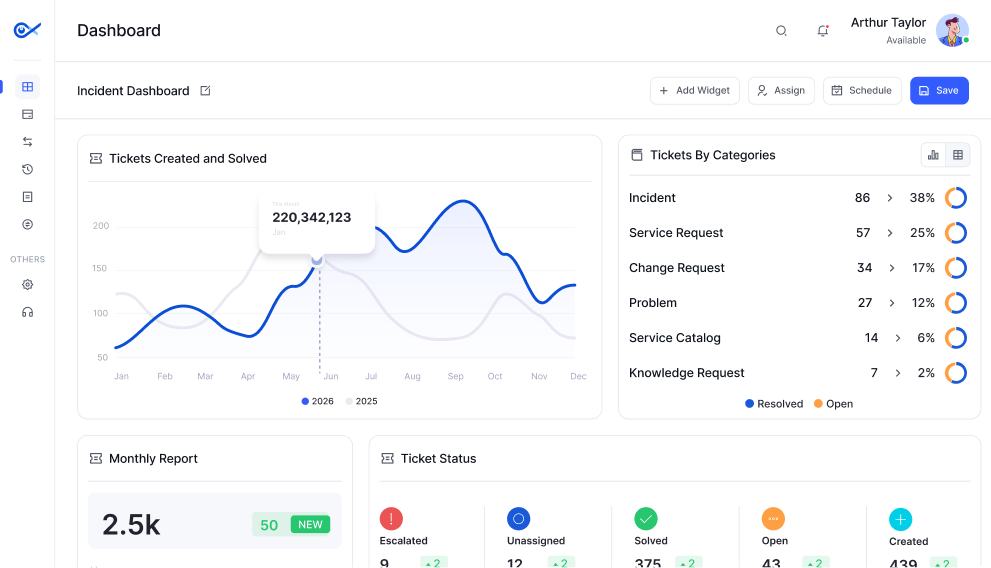
What is Incident Management?
Incident management is the IT process of detecting, logging, classifying, resolving, and closing unplanned disruptions to IT services - restoring normal service operation as quickly as possible while minimising impact on the business.
- ITIL Incident Management - Complete GuideAn incident is any unplanned interruption to an IT service or reduction in its quality - a server going down, an application becoming unavailable, or a user being unable to access a critical system. Incident management provides the structured process for responding to these events consistently and efficiently.
In ITIL, incident management is one of the core service operation processes, distinct from problem management (which finds root causes) and change management (which controls planned changes).
Incident Management Process - 7 Steps
ITSM is not a single process - it is an interconnected set of disciplines that govern how IT services are delivered, maintained, and improved across the organisation.

Detection
Incident identified - via monitoring alert, user report, or automated event

Logging
Incident recorded in the service desk with all available details

Classification
Incident categorised by type, urgency, and impact to determine priority

Assignment
Routed to the appropriate team or individual based on category and skill

Investigation
Root cause diagnosed and workaround or fix identified

Resolution
Service restored - fix applied or workaround implemented

Closure
Incident closed after user confirmation, record updated with resolution details
Incident vs Problem vs Change
| Term | What it manages |
|---|---|
| Incident | An unplanned disruption to a service - focus is on restoring service quickly |
| Problem | The underlying root cause of one or more incidents - focus is on permanent elimination |
| Change | A planned modification to the IT environment - focus is on controlled implementation |
| Realtionship | Incidents trigger problem investigations; problems may result in change requests |
Incident Management Metrics
Mean Time to Detect (MTTD)
Average time from incident occurrence to detection
Mean Time to Acknowledge (MTTA)
Average time from detection to assignment
Mean Time to Resolve (MTTR)
Average time from detection to full service restoration
First Call Resolution (FCR):
Percentage of incidents resolved at the first point of contact
SLA compliance rate
Percentage of incidents resolved within defined service level targets